Projects
Graduate Student Projects
Campus Agriculture Projects
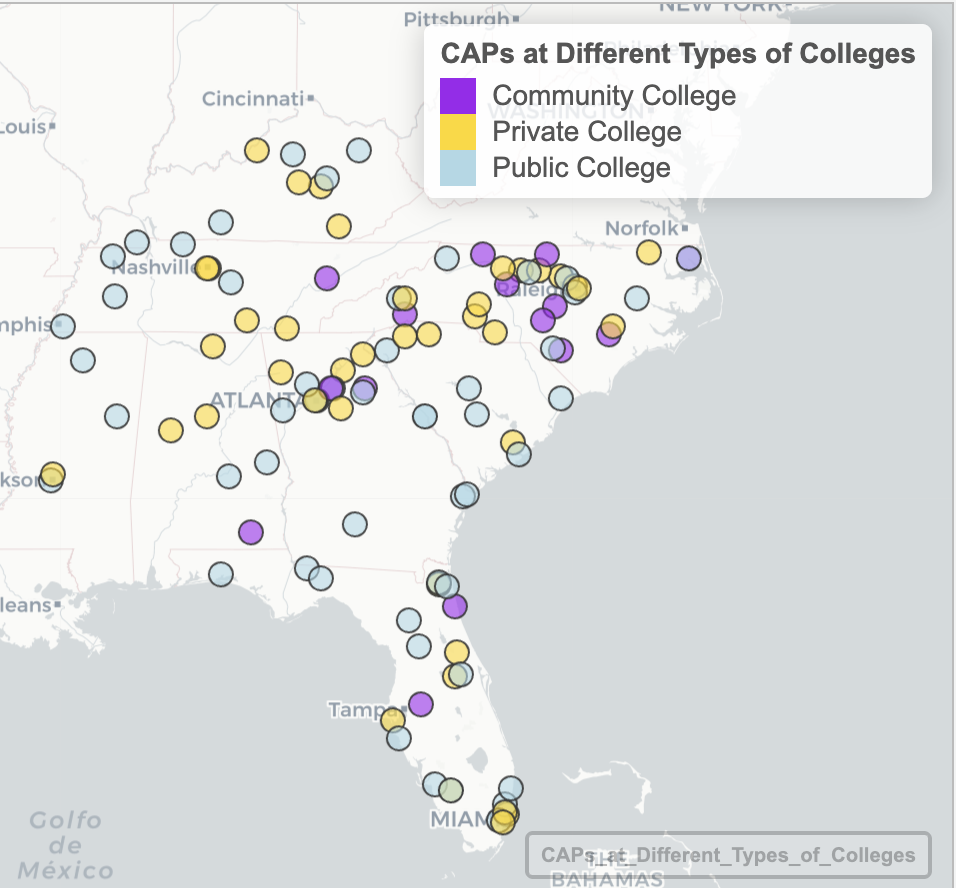
South Eastern Educational Database (SEED-CAP) Frieda’s research is focused on agroecology education at the tertiary level. She is building a database of campus agriculture projects on college campuses across the Southeastern United States. She is examining the different functions of these educational farms by analyzing their production, distribution, organizational practices, and curricula of their programs.
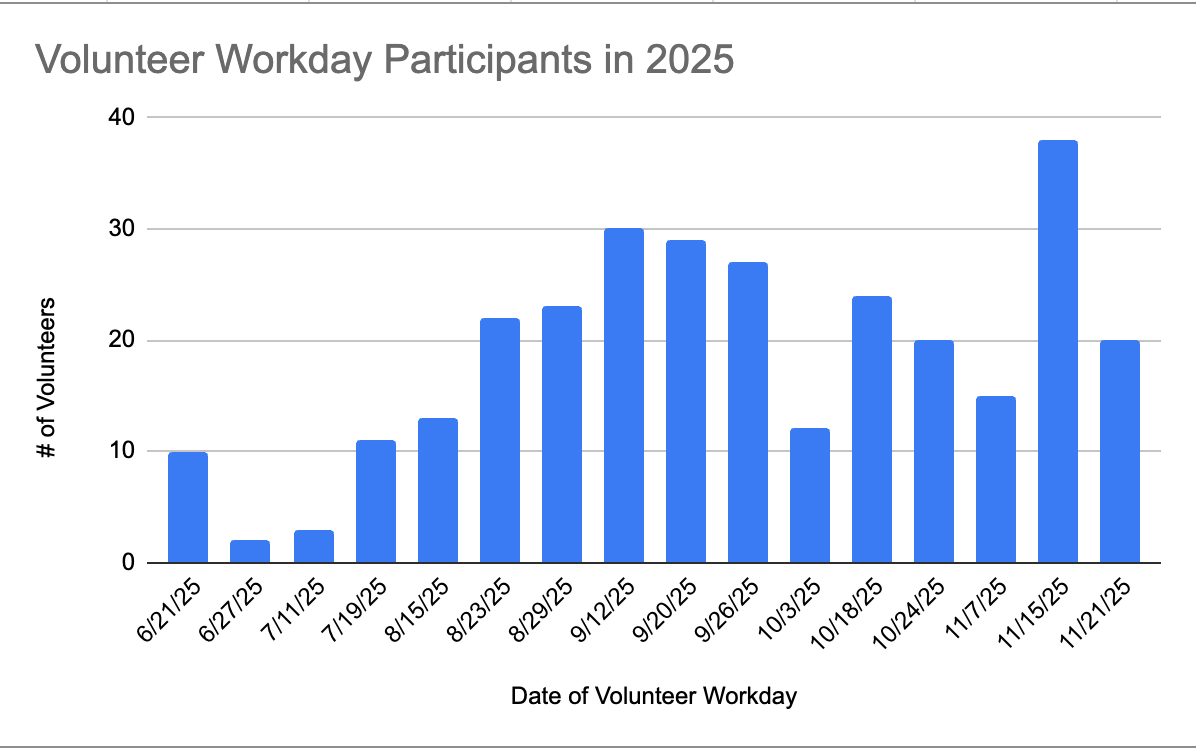
Learning Effects of Agricultural volunteering (LEAF-CAP) Additional research includes utilizing survey data to examine the educational impact volunteer workdays at the NC State Agroecology Education Farm have on participants.
Agronomic and Culinary Assessments of Landrace Maize
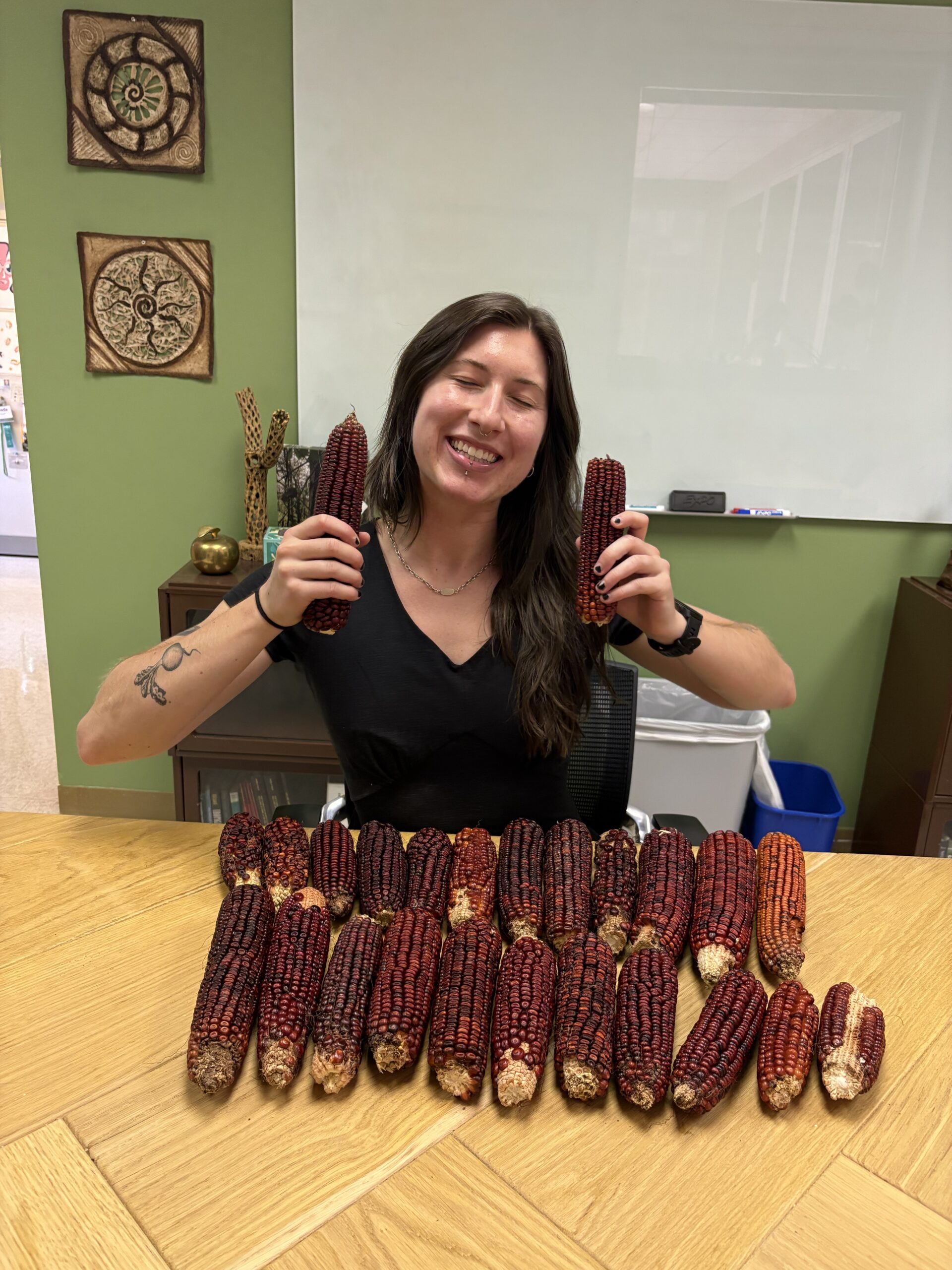
Emma’s research projects center around regionally adapted maize landraces, which are dynamic populations with rich histories, cultural associations, and genetic diversity. To amplify the culinary heritage of landraces, her first project aims to assess the flavor and qualities of foods prepared using landrace maize grown at student farms across North Carolina.

Maize landraces have evolved and adapted to their environments over time, allowing them to thrive for generations. Her second project will explore the resilience of landraces from the Southeastern U.S. by measuring their agronomic performance under different management practices. This research will offer insights into how maize populations respond to abiotic stressors, like water scarcity or low-fertility, empowering local farmers with more knowledge to support sustainable maize production.
Tracking Multiple Ecosystem Services
Lauren is working on developing a data dashboard for the NC State Agronomy Teaching Farm contrasting different ecosystem services to aid students and the general public in understanding the connections within and making better informed decisions regarding complex ecosystem management. These decisions include topics such as the adoption of diversified cropping systems and techniques based on multiple metrics, relationship interactions, and social-ecological factors (such as security or a sense of place) that may not be measured or valued the same way across every farm or community.
Long-Term Food Forest Management & Considerations
Food forests are often used as an ecosystem service to promote biodiversity on farms, but add additional complexity and maintenance to farm systems. Through this project, Lauren will identify how stakeholders’ needs, budget, and long-term maintenance considerations be applied to food forest design to support longevity. Application of findings will be used to re-design, implement, and manage the food forest at AEF.
D.R.I.V.E.S. Network: crop diversity as a climate strategy
Our lab studies how diversifying what farmers grow, through practices like cover crops, intercropping, and varied rotations, can make agriculture more productive and more resilient to a changing climate. The D.R.I.V.E.S. Network is one of the clearest examples of that work in action.
D.R.I.V.E.S. (Diverse Rotations Improve Valuable Ecosystem Services) pools data from many long-term agricultural experiments across North America, some running for decades, to ask a question no single farm can answer alone: what does diversifying crop rotations actually do for productivity, soil health, and a farm’s ability to withstand drought and other climate stress? Because the benefits of these practices are slow, showing up in soil characteristics that shift over years or in how a system holds up during a bad season, only long-term evidence can capture them clearly. That is what makes this kind of project matter, and why our lab invests in it: it turns rare, decades-long experiments into practical evidence farmers can use.
Within D.R.I.V.E.S., I help keep the network running as project manager, and I use its data to isolate the effect of cover crops, comparing cropping systems with and without them across many sites and years to separate a real, durable signal from the noise of any single farm or season. The analysis runs in R and is version-controlled on GitHub, so every step from raw data to final figure is transparent, reproducible, and easy for collaborators to build on.
Undergraduate Student Projects

Tommy’s project assessed soil fertility, soil health, and spatial variability across the Agroecology Education Farm to better understand how long-term organic management practices influence soil conditions. By comparing soil health indicators and nutrient levels across fields and hoop houses, the project identified substantial variability and highlighted opportunities to improve compost and amendment management for long-term soil health and crop production.
Fungal Diversity in Agroecological Soils
Andrews project explored fungal diversity in soils at the Agroecology Education Farm to better understand how agroecological management may support soil biodiversity. Fungi were isolated from different cropping areas, cultured, and genetically identified, revealing 83 fungal specimens, including several potentially undescribed species and highlighting the farm as a valuable site for studying soil microbial diversity.
